|
|
|
 |

|

| คำอธิบาย : |
sansaar

กลุ่ม :
ผู้ดูแลระบบ
|
I was sitting in the living room earlier today researching around Green Belt Architectural Businesses and I set down this feature. What do you think about it?
The protection and enhancement of the existing green infrastructure is important to conserve natural assets, protect local distinctiveness and minimise habitat fragmentation. Habitat networks are important in maximising areas of continuous and linked habitat. This requires an understanding of the existing green infrastructure: the network of habitats, greenspaces and green grid linkages; its assets, functional requirements and the benefits it could deliver. Green belt architectural consultants work closely with clients on the formulation of a brief, which clarifies all necessary spatial, technical and cost requirements. The Green Belt contains a number of individual or small groups of buildings, mostly historic agricultural or former industrial legacy buildings, which have the potential to be brought back into a beneficial use. However, if unsympathetically altered or extended then the openness of the surrounding Green Belt could be compromised. Whether you are a property developer looking at making a planning application, an investor assessing the optimum use to make of a property portfolio, or a lender undertaking โ€�due diligence' to minimise their investment risk, green belt architects provide initial advice to maximise development potential and reduce planning risk. Finding a green field plot worthy of building your dream home on isnโ€�t easy. But lateral thinking, detailed research and some savvy investigation can prove successful. A wealth of provisions exist to protect land. Nationally this protection can be found under areas of outstanding natural beauty (AON and Sites of Special Scientific Interest (SSSI), as well as National Parks. and Sites of Special Scientific Interest (SSSI), as well as National Parks.
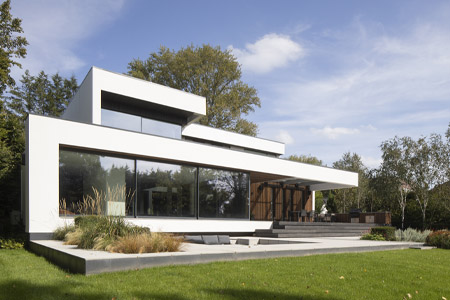
Where planning mechanisms are the sole instrument for managing green belt development, there is clear evidence that the Green Belt is likely to be eroded. This might be a slow process, but it is a relentless one. The UK government attaches great importance to Green Belts. The fundamental aim of Green Belt policy is to prevent urban sprawl by keeping land permanently open; the essential characteristics of Green Belts are their openness and their permanence. Proposals for the re-use of property in the green belt should be able to be readily served by required infrastructure including water, sewerage and electricity and be able to provide all required parking and access standards. Green buildings, as many know, have less negative impact on the environment than standard buildings. Their construction minimizes on-site grading, saves natural resources by using alternative building materials, and recycles construction waste rather than sending truck after truck to landfills. A well-thought-out strategy appertaining to Architect London can offer leaps and bounds in improvements.
Green Belt Land Isn't Hugely Effective
Planning controls should be strengthened for large-scale or damaging land-use changes in the countryside, in particular, large-scale farm buildings, new and improvement works by drainage bodies and water authorities, clearances of woodland, works affecting woodland and large-scale afforestation. What constitutes โ€�limited infillingโ€� either in a village or on a previously developed site in the Green Belt is likely to be case specific. The term โ€�limited infillingโ€� will therefore be taken to comprise the โ€�development of a small gap in an otherwise built up frontage or group of buildings, capable of accommodating no more than one or two dwellings or, where other uses are proposed, buildings of a similar scale, unless otherwise justified as an exception given the particular circumstances of the caseโ€�. The planning system itself is an approval engine. You just need to know how to operate the machine in the most efficient way possible. Knowledge of local and national policy at the earliest stage becomes a deciding factor in green belt site selection. The overarching goals of building โ€�greenโ€� are to reduce the social and environmental impacts of the built environment while improving the quality of life for occupants within buildings. Any case for the release of Green Belt for housing needs to focus on a qualitative assessment of Green Belt land, site by site in specific areas. Key design drivers for New Forest National Park Planning tend to change depending on the context.
Some green belt architects run annual focus groups to ensure that their own and wider team members are implementing sustainable design. They design inclusively and holistically in order to create positive social impact through their developments. The green belt has been one of the UKโ€�s most consistent and successful planning policies. Over the past century, it has limited urban sprawl and preserved the countryside around our cities, but is it still fit for purpose in a world of unprecedented urban growth and potentially catastrophic climate change? Green Belt land may allow family housing to be developed, as opposed to being almost all flatted development which will need to be prioritised on brownfield land due to the land constraints. A fundamental reappraisal of the Green Belt is arguably long overdue, but it should not be driven by issues such as house prices. Such a review should instead ask searching questions about the interconnectivity of cities and their natural hinterlands. Interestingly, there are a number of examples where green belt land has been re-designated for employment rather than housing. There are examples where a smaller, or different, part of the land is preserved โ€“ rather than that originally set aside as green belt โ€“ and a remainder parcel of land freed up without damaging the purpose and intent. Thanks to justification and design-led proposals featuring Net Zero Architect the quirks of Green Belt planning stipulations can be managed effectively.
Careful Siting And Location Is Critical
Proposals involving farm diversification on the green belt (including the introduction of farm shops selling predominately locally grown produce, processing, workshops or leisure activities) should be ancillary and related to the primary agricultural use of the site and be appropriate to a rural location to which it relates. For buildings on the mission to achieving net-zero carbon, they will require outstanding levels of energy efficiency alongside zero-carbon electricity and heat supplies. Much of the planning regime, including the regeneration powers of statutory bodies, is determined by legal rules and procedures. Green belt architects provide advice to developers on the powers, process and steps involved in advancing larger schemes, and work with other professionals and local authorities to help insulate the scheme against future costs and delays caused by potential legal challenges and third-party objections. The landscape character of a green field area must not be compromised by the development and proposals should have regard to the landscape backdrop, topographical features and levels. Trees, woodland and boundary features such as hedgerows, particularly beech and hawthorn, and stone dykes should be retained. Proposals should be able to be readily served by all necessary infrastructure, including water, sewerage and electricity and be able to comply with all required parking and access standards. A building can look beautiful and even be constructed from very expensive materials, but not be "green." Likewise, a building can be very "green" but visually unappealing. Local characteristics and site contex about Green Belt Planning Loopholes helps maximise success for developers.
Some commentators take the view that Green Belts promote โ€�leap-froggingโ€� of development from the large cities they surround to more dispersed locations, thereby increasing commuting times to major cities and exacerbating problems such as increased greenhouse gas emissions. Strong public awareness and support are important for the long-term protection of greenbelts, which is especially critical since the research shows that greenbelt policies are most often vulnerable to development and political pressures. A related, and possibly compounding, challenge is creating and maintaining a strong sense of connection between residents and their greenbelt. A green belt architect considers the energy efficiency of every structure they design and build. They view each client and project as a complete picture, taking into consideration all the factors that go into and around a building, including its budget, delivery method, schedule, functionality, environmental footprint, infrastructure requirements and long term sustainability goals. A โ€�Grand Designsโ€� style property can be built in the green belt if it meets the tests set out in Paragraph 80 of the National Planning Policy Framework. It is clear that much of the Green Belt does still meet the purposes of the NPPF and is fulfilling a key role. Such areas should be protected and where inappropriate development in the green belt is proposed, green belt architects can help clients to ensure that such locations continue to be protected and that proposed development is steered to other more sustainable locations. Following up on GreenBelt Land effectively is needed in this day and age.
Questioning Green Belt Designation
While the green belt remains an enduringly popular policy, and has prevented urban sprawl, it is not cost free. The opportunity cost of the green belt is a lack of developable land, resulting in less homes being built and higher prices. New houses in the UK are about 40 per cent more expensive per square metre than in the Netherlands, despite there being 20 per cent more people per square kilometre there than in England. The future could be an environmentally rich Green Belt with greater public access, woodlands, wetlands and natural parks. The environmental arguments for protecting the Green Belt are strengthened by the issues raised by climate change. Green belt architectural teams approach each project with creativity and open mind to understand their clients and make sure they are on the same page. They focus on understanding their clientsโ€� vision and develop design criteria that reflect their goals. Find extra insights on the topic of Green Belt Architectural Businesses on this House of Commons Library link.
Related Articles:
More Background Information On Net Zero Architects
Extra Information With Regard To Green Belt Planning Loopholes
More Background Findings On Net Zero Architects
Background Findings With Regard To Green Belt Consultants
Background Findings About London Architects
Extra Findings About Green Belt Architectural Businesses
Extra Information About Green Belt Consultants
|
|
[ วัน : 02 มกราคม 2024 ] [ เวลา : 19:47:28 ] [ ไอพี : 92.40.218.xxx ]
[
อ้างอิง
]
|
|
| [ วัน : 04 เมษายน 2026 ] [ เวลา : 12:34:24 ] [ ไอพี : 10.9.92.xxx ] |
|
|
 |
|